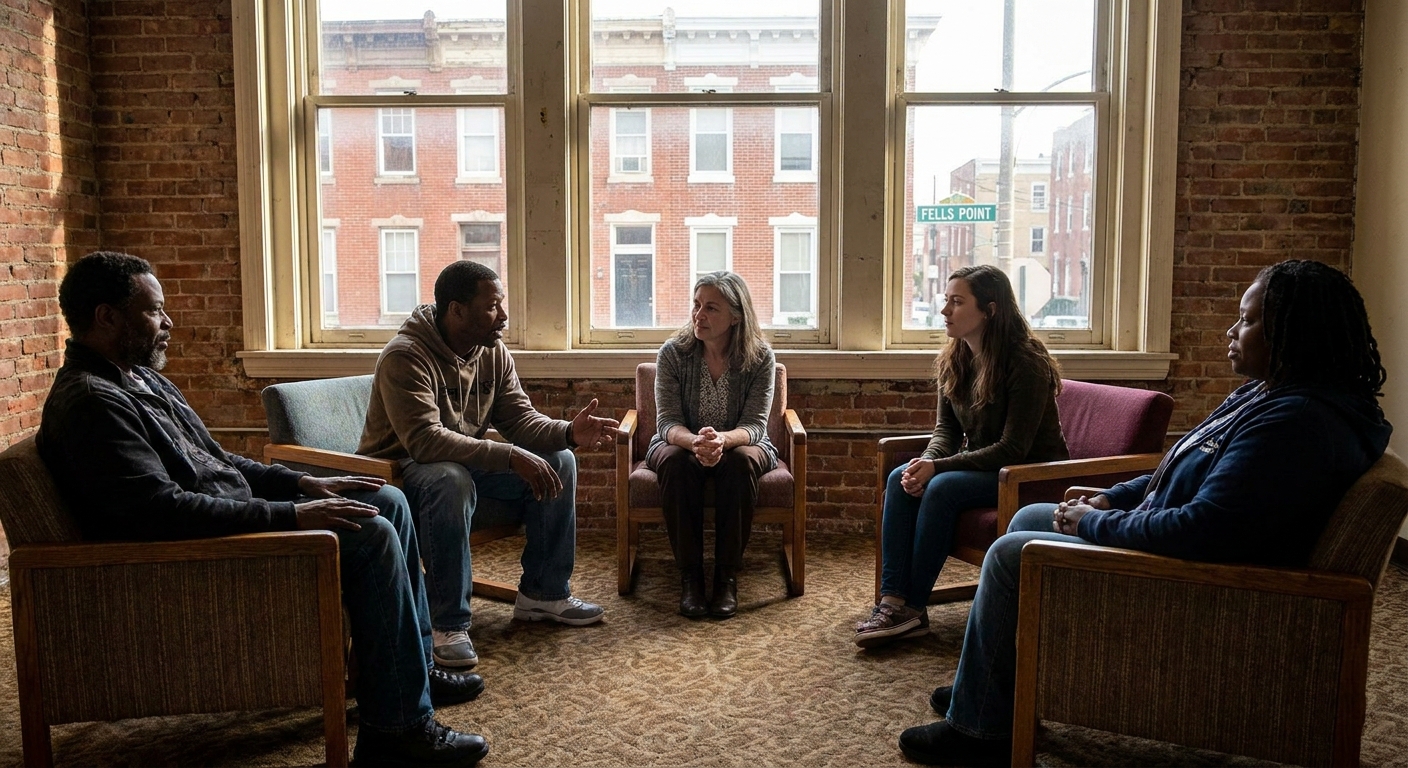

What is a community reentry recovery program
A community reentry recovery program is designed to support you as you transition from incarceration or justice involvement back into everyday life while working on addiction recovery. Instead of treating substance use in isolation, these programs address the real barriers you face in your community, such as housing, employment, trauma, and access to ongoing care.
When you return home, you may encounter blocked job opportunities, unsafe neighborhoods, and stigma. Research with formerly incarcerated Black adults in Wilmington, Delaware found that negative experiences during reentry are closely tied to structural barriers like limited employment and neighborhood violence, which in turn increase motivations for illegal behavior [1]. A strong community reentry recovery program is designed to interrupt that cycle and help you build a safer, more stable future.
At 70X7 Wellness Mission, programs are structured so you can work on sobriety and life rebuilding at the same time. Whether you are a veteran, a young adult, a working professional, or a family member supporting a loved one, you can find specialized support that speaks directly to your situation.
Why reentry-focused recovery matters
When you leave jail or prison, you are not just stepping back into your old life. You are entering a new season with new rules, expectations, and pressures. Without support, this period can be overwhelming and risky.
The realities you may face
You might experience:
- Difficulty finding stable employment
- Trouble securing safe and affordable housing
- Pressure to reconnect with old social circles or unsafe neighborhoods
- Untreated trauma, depression, or anxiety
- Limited access to mental health or addiction services
Studies show that these structural barriers, not just personal choices, play a big role in whether people return to illegal activity after release [1]. When your environment is full of obstacles, it can be harder to stay sober and focused on long term goals.
A community reentry recovery program addresses both your inner healing and your outer conditions. You are not only learning how to stay sober, you are also learning how to build a life where sobriety can realistically last.
Key elements of a community reentry recovery program
A high quality community reentry recovery program usually combines several components so you are supported practically, emotionally, and spiritually.
Pre release and post release planning
Many effective programs start before you are released. The Community based Reentry Program under the Second Chance Act offers both pre release and post release services to improve reintegration outcomes [2]. In a similar way, you may:
- Begin developing a reentry plan while still incarcerated
- Identify your main risks and strengths
- Connect with case managers or peer specialists you will work with after release
Once you return to the community, those same supports continue as you adjust to daily life.
Case management and navigation
Reentry is full of paperwork and systems. A case manager or reentry navigator can help you:
- Obtain identification and essential documents
- Apply for benefits, health coverage, or housing supports
- Connect to medical and mental health providers
- Coordinate legal, court, or probation requirements
The Virginia Department of Corrections, for example, offers a Reentry Resource Packet and Pathway to Benefits brochure to guide people through these steps [3]. A community reentry recovery program gives you similar step by step support so you are not trying to figure everything out alone.
Housing and recovery residences
Stable housing is one of the strongest predictors of successful reentry. Some programs partner with community residential programs or recovery housing. In Virginia, there are community residential programs, Oxford House recovery homes, and residences certified through the Virginia Association of Recovery Residences that support people with substance use disorders as they return to the community [3].
You might be offered:
- Transitional housing with on site support
- Sober living homes with peer accountability
- Help applying for vouchers or rental assistance programs
A reentry focused recovery program helps you move from short term shelter to long term stability.
Clinical and peer based addiction treatment
Your reentry plan should always include evidence based addiction care. A scoping review of 58 U.S. studies found that medications for opioid use disorder were the most common intervention in community based reentry programs, followed by peer and social support services, and that most studies showed positive impacts on reducing substance use [4].
In practice, this often looks like:
- Individual counseling and group therapy
- Trauma informed care and cognitive behavioral interventions
- Medication assisted treatment when appropriate
- Peer recovery support, including mentors with lived experience
Peer Recovery Specialists like those used in Virginia’s community supervision programs can play a powerful role by sharing their own stories and tools for long term recovery [3].
How community programs support different populations
Your path through reentry is unique. 70X7 Wellness Mission focuses on inclusive, specialized care, so you can access support that reflects your history, responsibilities, and culture.
If you are a veteran
As a veteran, you may be coping with PTSD, chronic pain, or moral injury. A community reentry recovery program that understands military culture can help you reconnect with purpose while addressing both substance use and trauma. You can explore options similar to an outpatient recovery program for veterans or a veteran addiction treatment program that respects your service and your need for privacy.
Some veterans benefit from holistic addiction recovery for veterans, which may integrate counseling, physical wellness, and spiritual care into reentry planning.
If you are a young adult
Young adults returning to the community often face unstable relationships, unfinished education, and peer pressure. You may feel like you are starting adulthood late or already behind. Targeted services, like young adult addiction recovery or addiction recovery for young adults, can focus on:
- Finishing school or starting job training
- Learning life skills such as budgeting and communication
- Building healthier friendships and support networks
Gender responsive approaches are especially important for young women. Research shows that women reentering the community often have lower income and more trauma and mental health concerns than men, and benefit from gender specific, trauma informed reentry programs [1].
If you are a working professional or healthcare worker
As a professional or healthcare worker with justice involvement, you may be worried about confidentiality, licensure, and reputation. A specialized community reentry recovery program can blend addiction care with career planning so you do not have to choose between your livelihood and your recovery.
You may consider support that mirrors addiction treatment for professionals or addiction recovery for healthcare workers. These programs often emphasize:
- Discreet scheduling and privacy
- Coping skills for high stress environments
- Ethical and vocational support as you rebuild your career
If faith is central to your life, a christian recovery program for professionals can connect career issues with spiritual growth.
If you are a family member
When a loved one is returning from incarceration, your whole household is in reentry, not just the person coming home. You might feel hopeful, anxious, or unsure how to set boundaries.
A strong community reentry recovery program offers:
- Family education about addiction, trauma, and relapse
- Coaching on communication and healthy expectations
- Joint sessions that address past hurt and future plans
You can also explore family-centered addiction treatment or faith-based family addiction recovery so your family system heals alongside your loved one.
The role of faith in reentry and recovery
For many people, faith is a key part of making sense of the past and building a new future. Community reentry recovery programs can integrate faith based services if this fits your values.
You might be drawn toward:
- Faith-based recovery for men or faith-based recovery for women
- Faith-based family addiction recovery that includes spouses and children
- Insurance-covered faith-based rehab or affordable faith-based addiction treatment so cost does not stand in your way
Faith based reentry programs like JUMPSTART Prison Ministry, which combines mentorship, life skills, and spiritual support, have shown very strong outcomes for staying out of prison long term [5].
Community based models that are working
Looking at successful programs around the country can give you a clearer picture of what is possible.
Legal and practical support
Programs like Root & Rebound provide legal and social support for people leaving prison, helping them address barriers in employment, housing, and family reunification. Participants report higher confidence in job prospects and stronger recognition of their own value [5]. Services like record clearing, similar to those offered by Easy Expunctions, can also remove major obstacles to rebuilding your life [5].
Housing and stability
Housing focused projects, like the Toledo Lucas County initiative that provided housing choice vouchers and application support, show how targeted housing assistance can ease the transition back into the community and support recovery [6].
Gender responsive and trauma informed care
The Women’s Reentry Program in Lancaster County uses gender specific risk assessments and trauma informed treatment for substance use, combined with transitional housing. This kind of model recognizes that women’s pathways to incarceration and recovery often differ from men’s, and tailors services accordingly [6].
Peer led and technology assisted support
In Hawai‘i, the New Directions Jail Diversion Program employs forensic peer specialists with lived mental health experience to provide immediate case management and treatment, helping some individuals avoid jail entirely [6]. In Washington, DC, tablet based cognitive behavioral interventions have helped incarcerated individuals build skills for reentry before they return home [6].
These examples show that when reentry is addressed directly, in combination with addiction treatment, your chances of long term success increase.
How 70X7 style programs support your whole journey
At the core of 70X7 Wellness Mission is the belief that every person deserves multiple chances to heal and rebuild. A community reentry recovery program shaped by this mission does more than provide clinical services. It walks with you through each stage of your transition.
Integrated, community-based addiction recovery
You do not have to choose between spiritual care, community support, and evidence based treatment. With a model similar to community-based addiction recovery, you can access:
- Counseling rooted in research and compassion
- Practical help with housing, employment, and education
- Spiritual or faith based options if they align with your beliefs
- Groups and mentorship that connect you with others on the same path
If you have higher clinical needs, you may also explore an addiction program for high-acuity clients where medical and mental health support are more intensive.
Outreach and accessibility
Reentry is often unpredictable. You might not be able to step into a traditional outpatient office three times a week. Services like outreach addiction counseling services and an accessible addiction treatment program can meet you where you are, with:
- Flexible scheduling
- Community based locations
- Support navigating transportation and cost
When you cannot come to the center, the center can come to you, through outreach, virtual sessions where appropriate, or partnerships with local service providers.
Education and community involvement
Recovery and reentry are not just personal issues. They are community issues. Through addiction education workshops, you, your family, and your community can learn more about:
- How addiction affects the brain and behavior
- How trauma and structural barriers shape reentry
- How to support someone through early sobriety and beyond
Reentry councils and community coalitions, like those operating in Virginia, show how bringing together agencies, organizations, and justice involved people can strengthen local support systems [3].
When your community understands what you are facing and how to help, your path forward becomes safer and more sustainable.
What to look for when choosing a reentry recovery program
Not every program will be the right fit for you. As you explore your options, consider the following.
- Does it address both addiction and reentry needs?
Look for programs that talk clearly about housing, employment, legal support, and life skills, not only sobriety. - Is the care evidence based and trauma informed?
Ask whether they use approaches like cognitive behavioral therapy, medications for opioid use disorder when needed, and trauma informed practices. The research shows that these approaches are effective in reducing substance use in reentry populations [4]. - Is there peer support and mentorship?
Peer recovery specialists and mentors with lived experience can give you practical strategies and hope rooted in their own journeys. - Is the program tailored to your identity and responsibilities?
If you are a veteran, a young adult, a professional, or a parent, look for specialized services like veteran specific supports, young adult addiction recovery, or family-centered addiction treatment. - Is it accessible and affordable?
Explore options like affordable faith-based addiction treatment or insurance-covered faith-based rehab if you want faith integrated care without overwhelming costs. - Does it connect you to long term supports?
Short term treatment is only part of the picture. You need ongoing community, support groups, and opportunities for growth.
Taking your next step
A community reentry recovery program gives you more than a second chance. It surrounds you with people, tools, and opportunities that make long term change possible.
You are not defined by your record, your past use, or your lowest moment. With the right blend of personalized addiction care, reentry planning, and community support, you can rebuild in a way that reflects who you are becoming, not only who you have been.
If you are ready to explore your options, you can begin by:
- Reaching out to a program that offers community-based addiction recovery
- Asking your probation or parole officer about reentry and housing resources
- Inviting your family into faith-based family addiction recovery or family education services
Your future is not fixed. With intentional support tailored to your journey, you can move from surviving reentry to building a stable, meaningful life in recovery.