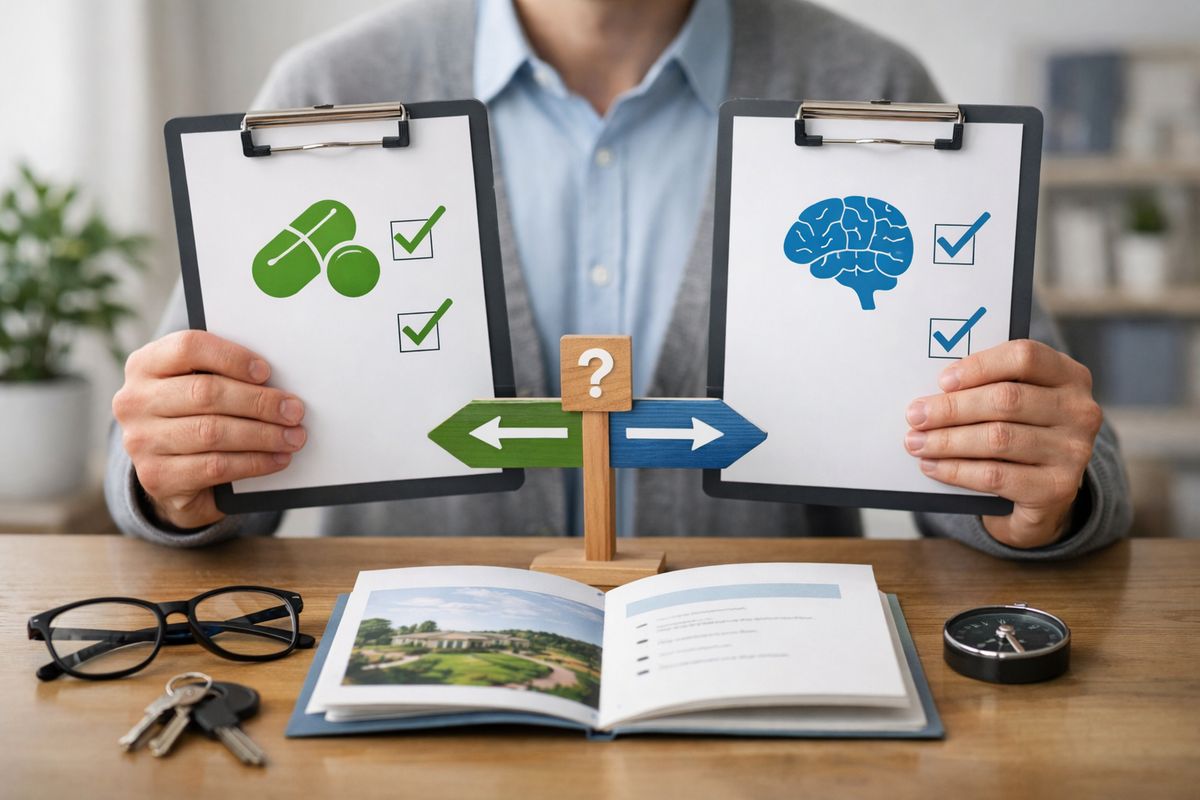

What addiction education workshops are and why they matter
Addiction education workshops give you practical tools to understand substance use, change behavior, and support long term recovery. Rather than a lecture you sit through once and forget, these workshops are designed to be interactive, skills based, and directly connected to your daily life.
Whether you are a veteran navigating community reentry, a young adult facing peer pressure, a professional trying to protect your career, or a family member wanting to help someone you love, addiction education workshops can meet you where you are. They fit naturally into broader programs such as community-based addiction recovery, young adult addiction recovery, and addiction treatment for professionals.
You might join an addiction education workshop as part of treatment or as a stand alone step if you are not ready for full rehab. In either case, you get a structured environment to explore questions like:
- Why do cravings feel so powerful?
- How do stress, trauma, or work culture affect your use?
- What actually works to prevent relapse?
- How can your family or support network play a healthy role?
The goal is not just to give you information. It is to help you practice new responses so that when you leave the room you are better equipped for real situations.
How workshops support prevention and long term recovery
Addiction education workshops are proven to support both prevention and ongoing recovery, especially when they focus on life skills and coping strategies.
A field trial at Gonabad Medical University in Iran found that life skills training workshops significantly improved drug abuse preventive behaviors in university students, and those gains were still measurable four years later [1]. These workshops covered self awareness, communication, problem solving, decision making, critical thinking, and stress management. Students who participated showed a reduced tendency toward drug use and stronger social skills that helped them avoid high risk situations [1].
For you, this research translates into something very practical. When workshops are built around concrete skills, you are more likely to:
- Recognize early warning signs in yourself
- Navigate social pressure with confidence
- Make clearer decisions when you feel overwhelmed
- Use healthier ways to regulate stress, anxiety, or anger
The same pattern shows up with adolescents. The Reasoning and Rehabilitation V2 program, used in schools in Spain, integrated cognitive behavioral and social emotional skills like empathy, problem solving, and negotiation. Over 12 months, students who completed the program had significantly lower rates of cigarette smoking, alcohol drunkenness, and cannabis use compared to peers who did not participate [2].
These findings underscore an important truth. When you address thinking patterns, emotions, and relationships through education and practice, you change more than your substance use. You reshape how you move through your life.
Core skills you build in addiction education workshops
While formats vary, most effective addiction education workshops help you build a common set of skills. These are not abstract concepts. They are everyday tools you can carry into work, school, home, or community settings.
Self awareness and emotional insight
You cannot change what you do not notice. Workshops often start by helping you name what you feel, observe your thoughts, and understand your personal triggers. Drawing from life skills training research, self awareness is one of the foundations for reducing drug abuse tendency and increasing healthy behaviors [1].
You might explore:
- How you experience stress in your body
- Patterns in your use, such as drinking after specific meetings or arguments
- Links between trauma, military service, moral injury, or burnout and your substance use
For veterans, this might be tied into holistic addiction recovery for veterans. For healthcare workers, it might fit within addiction recovery for healthcare workers as you unpack compassion fatigue and chronic stress.
Communication and relationship skills
Addiction rarely happens in isolation. Conflict with partners, colleagues, or family can trigger use, and unresolved resentment can make it harder to accept help.
Workshops give you space to practice:
- Saying no or setting limits without aggression
- Asking for support clearly
- Repairing trust after conflict
- Listening to others without immediately defending yourself
The Gonabad University study found that strengthening interactive skills helped students gain greater social acceptability and made drug refusal easier [1]. You can apply the same principles in your home, unit, or workplace.
If you attend with loved ones, these elements often blend naturally into family-centered addiction treatment or faith-based family addiction recovery, where everyone learns new ways to communicate.
Decision making and problem solving
When you are under pressure, it is common to default to familiar, often harmful, choices. Workshops walk you step by step through healthier decision making.
You learn to:
- Break down a high risk situation into smaller, manageable parts
- Identify options other than using
- Weigh short term relief against long term consequences
- Plan your next steps if something does not go as expected
Both the life skills workshops in Iran and the R&R2 program in Spain integrated problem solving and critical reasoning. Participants who practiced these skills showed better outcomes in avoiding or reducing substance use over time [3].
Coping with stress, cravings, and emotions
Stress management is another consistent theme in effective addiction education workshops. Instead of simply telling you to avoid stress, facilitators show you how to move through it.
You might learn and practice:
- Grounding and breathing techniques
- Short, realistic self care routines that fit a busy schedule
- Ways to cope with loneliness, grief, or anger without numbing out
- Behavioral strategies to surf cravings rather than obey them
Adolescents in the R&R2 program had fewer episodes of drunkenness and lower cannabis use after completing training in emotional regulation and negotiation skills, although the study also showed that these gains can fade if support does not continue [2]. This reminds you that workshops are most powerful when paired with ongoing care.
How workshops fit into specialized programs for different groups
Addiction does not look the same for a young adult in college, a veteran, a working professional, or a parent. Neither should education. At 70X7 Wellness Mission, addiction education workshops are woven into broader, population specific programs so you receive support that reflects your reality.
Veterans and service members
If you are a veteran, you may be balancing post service adjustment, physical pain, traumatic memories, and a strong culture of self reliance. You might also be working through housing, employment, or legal transitions that make community reentry more complex.
In a setting connected to a veteran addiction treatment program or outpatient recovery program for veterans, addiction education workshops can address:
- The impact of combat stress, moral injury, or repeated exposure to trauma
- Military culture and how it shapes your view of help seeking
- Practical skills for navigating triggers during community reentry, such as crowds, celebrations, or isolation
- Coordination with community reentry recovery program services so you have consistent support
For many veterans, a faith based lens is also important. In those cases, education can align with faith-based recovery for men or faith-based recovery for women, tying practical skills to spiritual values.
Young adults and students
If you are in your late teens or twenties, you might be dealing with heavy peer pressure, social media influence, and uncertainty about your future. Substances can show up as a way to cope with anxiety, fit in, or manage untreated depression.
Workshops within addiction recovery for young adults or young adult addiction recovery often focus on:
- Understanding how substances affect the developing brain
- Navigating parties, campus life, and social scenes without losing your boundaries
- Managing academic or early career stress
- Building networks of peers who support sobriety and mental health
The evidence from student and school based programs shows that giving young people concrete skills in decision making, empathy, and stress management can reduce smoking, alcohol misuse, and drug use [3].
Professionals and frontline workers
If you are a professional, especially in healthcare, legal, corporate, or ministry roles, you may feel intense pressure to appear competent at all times. Fear of professional consequences can delay your decision to seek help.
Within addiction treatment for professionals or addiction recovery for healthcare workers, addiction education workshops can:
- Address licensing, confidentiality, and return to work questions
- Explore burnout, secondary trauma, and perfectionism
- Teach boundaries and time management strategies that protect your recovery
- Integrate spiritual or values based perspectives through a christian recovery program for professionals if that reflects your faith
Continuing education is especially important in these settings. As of 2026, substance abuse professionals are encouraged to pursue ongoing training so they can offer up to date, compassionate care to clients. This continuing education also helps them meet state licensing and certification requirements [4].
Families and loved ones
You may be attending workshops because you love someone who is struggling. Families need just as much education and support as the person in treatment.
Within family-centered addiction treatment or faith-based family addiction recovery, you can learn to:
- Understand addiction as a chronic, treatable condition rather than a moral failure
- Set healthy boundaries that protect your wellbeing
- Avoid enabling patterns without withdrawing love
- Support recovery in ways that are realistic for you
The research from life skills training highlights that parental education influences prevention. Students whose fathers had higher levels of education showed stronger drug abuse preventive behaviors [1]. When you, as a parent or caregiver, receive targeted education, you become a more effective part of your loved one’s support system.
Where high quality addiction education workshops come from
Behind every effective workshop is a commitment to quality and ongoing learning. National organizations have developed comprehensive addiction education resources that inform local programming.
The American Society of Addiction Medicine is currently one of the largest providers of addiction medicine education, offering more than 300 hours of continuing education for diverse professionals, including physicians, nurses, social workers, counselors, and administrators [5]. Their eLearning Center provides on demand workshops, webinars, and recordings so professionals can deepen their knowledge and improve treatment outcomes over time [5].
The Society of Teachers of Family Medicine has also created a national addiction medicine curriculum with 13 interactive modules, each designed to be completed in about one to one and a half hours [6]. These modules include videos, handouts, assessments, and supplemental resources and are available at no cost to learners who sign up through Canvas [6].
At a broader systems level, SAMHSA supports the training of a diverse behavioral health workforce. Programs such as the Addiction Technology Transfer Center Network, the Opioid Response Network, and the Providers Clinical Support System all provide specialized training and mentoring related to substance use disorder and medications for opioid use disorder [7]. These resources reach psychiatrists, psychologists, pharmacists, nurses, social workers, counselors, peer specialists, clergy, and more [7].
When you attend a local addiction education workshop that is grounded in these national standards, you benefit from evidence based content that is continually updated.
Formats that make workshops more accessible to you
Accessibility is essential if you are juggling work, school, caregiving, or service responsibilities. Addiction education workshops now use multiple formats to meet you where you are.
Technology plays a key role. Digital learning platforms allow you and your providers to access webinars, recorded sessions, and interactive modules without traveling long distances. This can be especially valuable if you live in a rural area, have limited transportation, or need to maintain your job while engaging in care [4].
You might encounter:
- Brief workshop series built into an accessible addiction treatment program
- Stand alone community sessions linked to outreach addiction counseling services
- Hybrid formats that combine in person groups with online follow ups
- Faith integrated workshops within affordable faith-based addiction treatment or insurance-covered faith-based rehab
The Massachusetts Bureau of Substance Addiction Services, for example, collaborates with organizations like the Addiction Technology Transfer Center of New England and the New England Institute of Addiction Studies to offer trainings, conferences, and symposia that support workforce development and licensure pathways for counselors [8]. Those efforts translate into better trained staff at the local programs you attend.
Integrating workshops with your broader recovery plan
Addiction education workshops are most powerful when they are part of a larger, personalized recovery strategy. At 70X7 Wellness Mission, education is not an isolated activity. It is a thread that runs through everything you do.
You might see it integrated into:
- Early outreach and engagement through outreach addiction counseling services
- Intensive services through an addiction program for high-acuity clients if your needs are more complex
- Long term support as you transition into a community-based addiction recovery environment
If you are a veteran, this may be combined with holistic addiction recovery for veterans and a tailored veteran addiction treatment program. If you are a professional, education can be embedded within a christian recovery program for professionals or a secular track that focuses on your field.
The key is that your workshops are not generic. They are shaped by your background, your responsibilities, your strengths, and your goals.
Addiction education workshops do more than explain addiction. They equip you, your family, and your community with shared language, practical skills, and a common plan for moving forward.
Taking your next step
If you are considering addiction education workshops, you do not need to already have everything figured out. You might be sober, actively using, supporting someone else, or simply feeling concerned about where your current patterns are leading.
Your next step could be as simple as:
- Joining a single workshop bundled into an accessible addiction treatment program
- Exploring community-based addiction recovery where education is paired with peer support
- Asking how workshops fit into specialized tracks for young adult addiction recovery, addiction treatment for professionals, or a veteran addiction treatment program
Wherever you enter, you can expect a setting that respects your experience and offers practical tools instead of judgment. With expert led addiction education workshops, you are not simply told to change. You are shown how, supported as you practice, and connected to a community that walks with you as you transform your life.
References
- (NCBI)
- (NCBI – PMC)
- (NCBI, NCBI – PMC)
- (Willard Ohio Detox)
- (ASAM)
- (STFM)
- (SAMHSA)
- (Mass.gov)