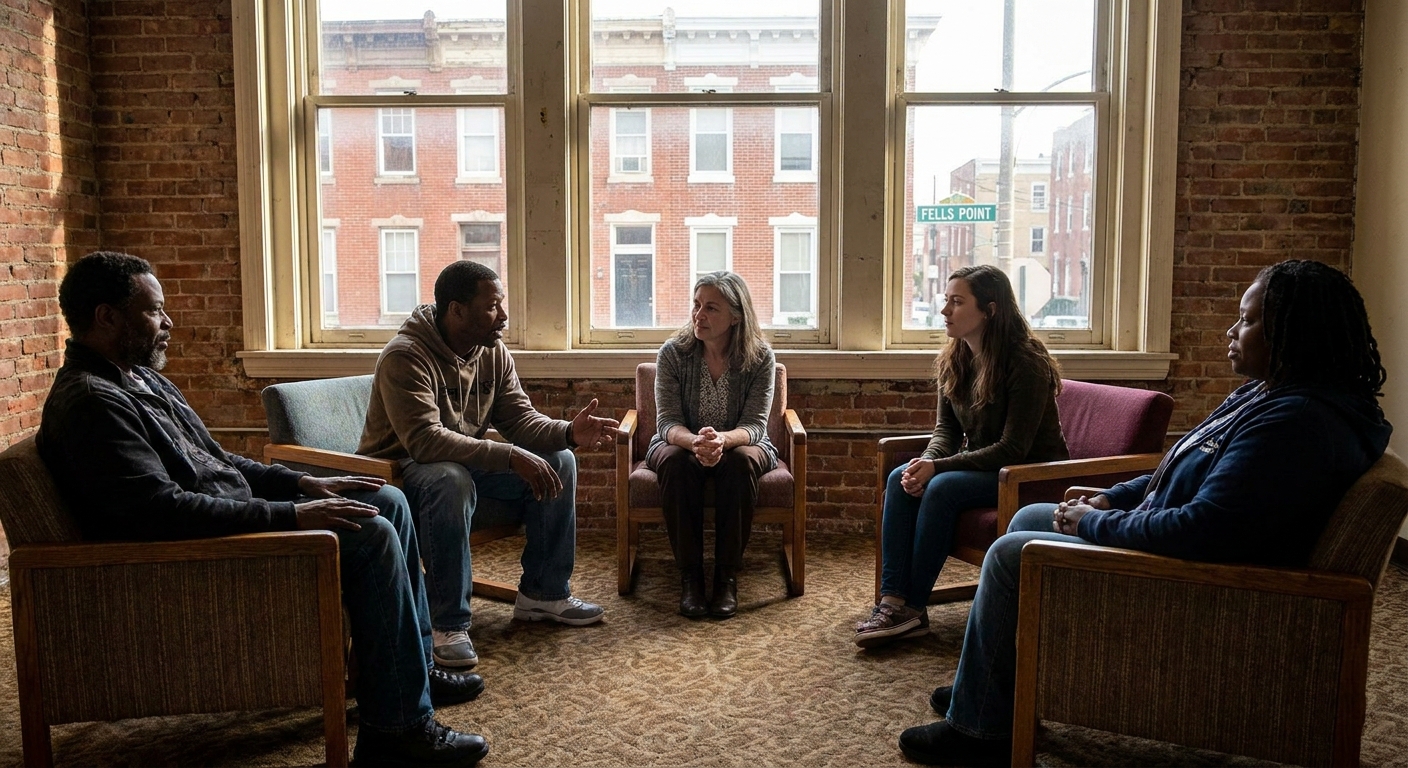

Understanding young adult addiction recovery
Young adult addiction recovery looks different from recovery later in life. You are still building your identity, education, career, and relationships while trying to manage a substance use or behavioral addiction. Most substance use disorders begin in young adulthood, and early intervention with evidence-based care is critical to prevent long-term health problems and chronic addiction [1].
You may also be navigating unique pressures, such as college demands, early career expectations, financial stress, or the impact of social media and technology. Effective young adult addiction recovery programs recognize these realities and provide targeted, age-specific support instead of a one-size-fits-all model.
In this guide, you will explore the types of programs that are especially helpful for young adults, along with examples of specialized services for veterans, professionals, and families. You will also see how 70X7 Wellness Mission’s community of care connects you with the right level of support, from early intervention to long-term recovery.
Why specialized care matters for young adults
Young adults often have different needs, motivations, and risks than older adults. A program that understands these differences can significantly improve your chances of long-term recovery.
Developmental and brain changes
Your brain is still developing into your mid to late twenties, especially the areas that handle impulse control, planning, and emotion regulation. This makes you more vulnerable to both substance use and process addictions such as gaming or social media use [2].
If you are dealing with a process addiction, you might notice:
- Compulsive gaming, gambling, or internet use
- Difficulty stopping social media or online shopping
- Increasing time online despite serious consequences
These patterns are tied to dopamine-driven highs that quickly fade, which can push you to seek more of the behavior and worsen mental health and functioning [3].
Co-occurring mental health conditions
Anxiety, depression, trauma, and mood disorders often appear or intensify during young adulthood. Many young adults with substance use issues also live with one or more mental health conditions. Programs built for your age group prioritize integrated or dual-diagnosis care, instead of treating addiction in isolation.
Individual therapy plays a central role. Working one-on-one with a counselor gives you a private, nonjudgmental space to explore the roots of your substance use or behavioral addiction, especially during major life transitions [4]. Therapists help you:
- Manage anxiety, depression, and trauma as part of addiction care
- Develop emotional regulation skills to prevent relapse
- Replace unhealthy coping habits with healthier strategies
- Build a personalized recovery plan that fits your goals and history
The importance of early and ongoing engagement
Young adults benefit when treatment starts early and remains continuous, even when relapse occurs. Evidence shows that ongoing engagement, supported by patient-centered care, harm reduction, and recovery coaching, improves retention and reduces emergency department use in young adults with substance use disorders [1].
Relapse rates for substance use are similar to other chronic illnesses, approximately 40 to 60 percent, which means relapse is common and does not represent failure [5]. The goal is to stay connected to support, adjust your plan, and keep moving forward.
Core elements of strong young adult programs
When you look at young adult addiction recovery options, certain features consistently support better outcomes.
Evidence-based therapies and medical care
Effective programs rely on therapies and medications that have been tested and shown to work. For many young adults, this includes:
- Cognitive Behavioral Therapy (CBT) to identify and change unhelpful thoughts and behaviors
- Dialectical Behavioral Therapy (DBT) when emotional dysregulation and self-harm risks are present
- Medication-assisted treatment for opioid, alcohol, or tobacco use disorders
Young adults with opioid, alcohol, or tobacco use disorders should be offered FDA-approved medications alongside comprehensive assessments and psychosocial services. Yet only about one in four young adults with opioid use disorder receive these medications, which reflects a major treatment gap [1].
Programs that work to close this gap provide an important lifeline and help you stabilize more safely and effectively.
Individual therapy as a foundation
Individual therapy is especially powerful in young adulthood because it gives you:
- A safe place to talk about identity, relationships, and future goals
- Support for co-occurring mental health conditions
- Accountability that is tailored to your pace and readiness
Counselors use this space to build your motivation, help you understand your triggers, and design coping strategies that match your daily life. This level of personalization increases the effectiveness of treatment and supports long-term change [4].
Family, peers, and community support
You do not recover in isolation. Strong programs connect you with:
- Family support and education when it is safe and appropriate
- Peer groups where others your age share similar challenges
- Community-based services that help with school, work, and housing
Family involvement often predicts better long-term outcomes, especially for adolescents and young adults. When families participate in therapy and learn new communication and boundary-setting skills, it can reduce conflict and strengthen your support network [6].
At 70X7 Wellness Mission, you also have access to community-based addiction recovery that focuses on connection, mentorship, and practical support during and after treatment.
Levels of care that fit young adult life
The best young adult addiction recovery programs match the intensity of care to your current needs and life situation rather than assuming that more restrictive care is always better.
Outpatient and intensive outpatient programs
Research suggests that, for many young adults, outpatient treatment is as effective as inpatient programs and is associated with better long-term outcomes. Whenever possible, care should be delivered in the least restrictive environment to protect your autonomy and keep you engaged in education, work, and community activities [1].
Outpatient and intensive outpatient programs (IOPs) may include:
- Multiple therapy sessions each week
- Group therapy with peers
- Family therapy and education
- Psychiatric evaluation and medication management
For example, the New York Center for Living offers an IOP with 6 to 9 clinical hours weekly, including individual, group, and family therapy plus psychiatric services tailored to adolescents and young adults [7]. This kind of structure allows you to maintain school or work while receiving meaningful support.
If you are a veteran who needs a flexible option, an outpatient recovery program for veterans can help you balance treatment with daily responsibilities while still addressing trauma, military culture, and reintegration challenges.
Community reentry and step-down support
When your symptoms begin to stabilize, step-down care becomes essential. Community-focused programs help you practice recovery in real life instead of only in clinical settings. A structured community reentry recovery program supports you as you:
- Transition from higher to lower levels of care
- Rebuild routines around school, work, and relationships
- Connect with supportive communities such as faith groups, peer mentors, or alumni networks
Since less than half of people who start treatment complete it, and many struggle after discharge, ongoing community support plays a major role in keeping you engaged and preventing isolation [5].
Programs for young adults with behavioral and process addictions
Not every addiction involves substances. Many young adults grapple with process addictions that can be just as disruptive to mental health, relationships, and daily functioning.
Understanding process addictions in young adults
Process addictions include:
- Gaming and video gaming disorder
- Internet and social media addiction
- Online gambling and sports betting
- Compulsive shopping or pornography use
Generation Z, ages 16 to 30, is significantly more likely than older generations to develop gaming addiction, and males are about three times more likely than females to meet criteria for gaming addiction [2]. In one college sample, 45 percent of male students and 32 percent of female students met criteria for internet addiction [2].
For many young adults, these behaviors start as recreation or stress relief and slowly become compulsive, with serious consequences for grades, work performance, relationships, and mental health [3].
Integrated treatment approaches
Programs that specialize in young adult process addictions usually focus on:
- CBT and DBT to change thoughts and behaviors around technology and other activities
- Experiential therapies such as martial arts, yoga, and meditation to regulate stress
- Creative arts therapies that help you process emotions and trauma
- Family and community components that reshape your environment
Newport Academy and Newport Institute both emphasize addressing the underlying mental health issues such as trauma, depression, anxiety, or PTSD that often drive process addictions, instead of only focusing on surface behaviors [8].
If you are seeking a faith-informed approach to behavioral or substance addictions, you can also consider faith-based recovery for men or faith-based recovery for women. These programs integrate spiritual support, community, and practical tools for setting boundaries with technology and substances.
Young adult programs for specific populations
Young adults are not a single, uniform group. You may be juggling military service, a professional career, parenting, or caregiving responsibilities. Specialized programs honor your reality and remove barriers to care.
Veterans and service members
If you are a young veteran, your addiction recovery journey may intersect with combat exposure, moral injury, and challenges during civilian reentry. Stigma about seeking help can be especially strong in military culture.
A tailored veteran addiction treatment program connects you with clinicians who understand military service, trauma, and VA systems. Many veterans also benefit from holistic addiction recovery for veterans, which can include:
- Trauma-informed therapy
- Peer support among other veterans
- Spiritual care or chaplaincy
- Physical wellness, mindfulness, and somatic practices
This combination supports both psychological healing and spiritual restoration as you transition back into civilian life.
Young professionals and students
If you are building a career or completing an advanced degree, you may face high-performance expectations, long hours, and cultures that normalize heavy drinking or stimulant misuse. Treatment that ignores these realities may feel out of touch.
Programs like the Young Professionals track at New York Center for Living aim to provide flexible schedules and evidence-based care that allow you to maintain a work-life balance while addressing addiction [7]. At 70X7 Wellness Mission, you can find similar support through:
- Addiction treatment for professionals when you are navigating licensure, confidentiality, and career risk
- Addiction recovery for healthcare workers if you work in medicine, nursing, or allied health and face unique stressors and access to controlled substances
- A christian recovery program for professionals when you want to integrate faith and ethics with your recovery process
These programs recognize that maintaining your professional identity and responsibilities is part of your healing, not a barrier to it.
Family-centered recovery for young adults
Families are often deeply affected when a young adult struggles with addiction. You may feel torn between independence and reliance on parents or caregivers. Families may experience fear, guilt, anger, or confusion about how to help.
Evidence suggests that when families engage in treatment, adolescents and young adults have a higher chance of sustained recovery [6]. At 70X7 Wellness Mission, family-centered addiction treatment and faith-based family addiction recovery create spaces where:
- Family members learn about addiction as a health condition
- Communication patterns and boundaries are addressed
- Parents and caregivers receive support for their own stress and grief
- Faith communities can provide additional encouragement when desired
This approach views your family, when safe and appropriate, as an active partner in your recovery rather than a passive observer.
Making treatment accessible and sustainable
One of the biggest barriers for young adult addiction recovery is simply getting into care and staying long enough to benefit from it.
Navigating access and affordability
In 2023, more than 95 percent of people in the United States who needed drug rehab did not receive it [5]. Reasons include cost, lack of nearby services, stigma, and confusion about where to start.
To lower these barriers, 70X7 Wellness Mission offers an accessible addiction treatment program that works with insurance, church partners, and community resources. You can also explore affordable faith-based addiction treatment and insurance-covered faith-based rehab if you want to integrate spiritual support without sacrificing quality or financial stability.
In addition, outreach addiction counseling services and addiction education workshops help you learn about options, understand what to expect, and connect with care before your situation reaches a crisis point.
Staying engaged through setbacks
Even with good access, staying in treatment and maintaining recovery is challenging. Less than 43 percent of people who begin drug and alcohol treatment complete their programs, and many need more than one attempt to achieve long-term change [5].
A large national survey found that while the average number of serious recovery attempts before success was a little over five, the median was only two. This means most people resolve serious alcohol or other drug problems in relatively few attempts, although a minority need many more [9]. The number of attempts did not differ significantly by primary substance, and more attempts were linked to greater psychological distress, which highlights the importance of compassionate, ongoing support [9].
At 70X7 Wellness Mission, you are encouraged to view recovery as a journey instead of a single pass-or-fail attempt. Programs such as:
- Addiction program for high-acuity clients
- Addiction recovery for young adults
- Community-based addiction recovery
are designed to keep you connected to care across stages of stability, crisis, and growth.
How to choose the right young adult program
When you compare programs, it can help to ask a few focused questions rather than feeling overwhelmed by every detail.
A good young adult recovery program fits your current needs, respects your stage of life, and offers enough flexibility for you to stay engaged.
Consider the following as you decide:
- Does the program specifically mention services for young adults or your age group, or is it general?
- Are evidence-based therapies and, when appropriate, medications clearly part of care?
- How are co-occurring mental health issues such as anxiety, depression, or trauma addressed?
- What role do family, peers, and community play?
- Are there options tailored to your situation, such as veteran status, professional role, or faith tradition?
- Is the program accessible in terms of cost, location, language, and cultural or spiritual fit?
70X7 Wellness Mission’s network exists to help you answer these questions. Whether you are seeking Christ-centered recovery, community reentry support, or specialized care as a veteran or professional, you will find programs that respect your story and walk with you at each step.
Taking your next step
If you recognize yourself or someone you love in any of these descriptions, you are not alone, and you are not behind. Young adult addiction recovery is both possible and common, especially when you have access to age-appropriate, specialized care.
Your next step might be as simple as:
- Attending an addiction education workshop
- Reaching out to an accessible addiction treatment program coordinator
- Exploring a community-based addiction recovery group
- Asking about addiction recovery for young adults in your area
Wherever you are starting, there is a path forward that honors your life, your goals, and your future.