
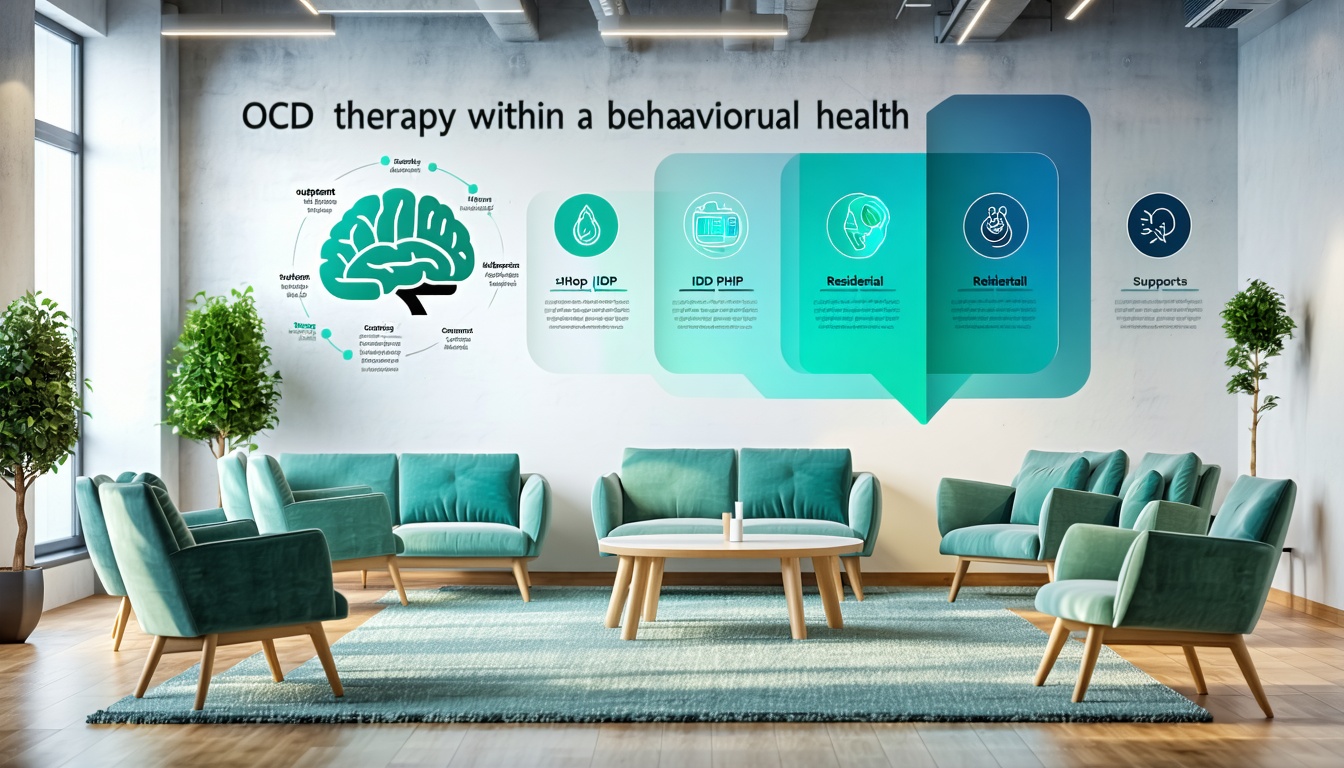
When considering ocd therapy with behavioral health program, you’re taking a step toward a structured approach that addresses your symptoms and any co-occurring challenges. Through a combination of professional assessment, evidence-based treatments, and supportive services, you can learn to manage obsessive thoughts and reduce compulsive behaviors in a safe and guided environment. This guide will walk you through the continuum of care—ranging from outpatient sessions to residential stays—and show how integrated services support lasting recovery.
Obsessive-compulsive disorder (OCD) is a chronic condition marked by recurrent distressing thoughts and repetitive behaviors that can consume hours of your day and impair social, occupational, or personal functioning [1]. It affects around 1 percent to 3 percent of people over their lifetime and often coexists with anxiety, depression, or substance use. Managing OCD effectively requires tailored interventions, and a comprehensive behavioral health program offers the framework needed for meaningful progress.
Understand OCD therapy
A behavioral health program for OCD brings together multiple disciplines—including psychiatry, psychology, nursing, and case management—to create an individualized plan. In an ocd therapy and treatment program, you can expect:
- A thorough diagnostic evaluation by a psychiatrist or psychologist
- Regular individual therapy sessions to explore triggers and coping strategies
- Group therapy and peer support to normalize your experience
- Medication management overseen by a prescribing clinician
- Family education and involvement to strengthen your support system
The goal of therapy is to break the cycle of obsessions and compulsions by teaching you skills to tolerate anxiety, reframe unhelpful thought patterns, and replace rituals with healthier responses. You’ll work with an interdisciplinary team that monitors progress, adjusts treatment components, and helps you set realistic milestones.
Explore levels of care
Behavioral health programs offer a continuum of care so you can find the level of support that matches your needs. As symptoms improve, you may step down from one level to the next.
Outpatient therapy
In an ocd outpatient therapy program, you:
- Attend weekly or biweekly therapy sessions
- Meet with a psychiatrist or nurse practitioner every 4 to 8 weeks for medication review
- Participate in group skills training focused on anxiety management
- Maintain your daily routines at home, work, or school
Outpatient care is ideal when OCD symptoms are moderate and you have a stable home environment.
Intensive outpatient program
An iop for mental health and substance abuse provides 9 to 20 hours of programming per week while you return home each evening. You’ll engage in:
- Structured group therapy covering exposure techniques and stress-reduction skills
- Individual counseling to refine personalized goals
- Case management to coordinate community resources
- Family sessions to improve communication and support
IOP bridges the gap between standard outpatient care and more intensive services.
Partial hospitalization program
A php program for mental health disorders offers a full-day treatment schedule without overnight stays. You will:
- Attend 20 to 40 hours of therapy and skill-building groups weekly
- Receive on-site medication monitoring and medical support
- Engage in holistic activities such as mindfulness and relaxation training
- Transition gradually to less intensive services as you gain stability
PHP is suited for those who need daily clinical oversight but can return to a supportive home setting.
Residential treatment
A residential mental health treatment program provides 24-hour care in a structured, safe environment. Key features include:
- Around-the-clock clinical supervision by mental health professionals
- Daily group and individual therapy focused on ERP and coping strategies
- Peer community that fosters accountability and mutual encouragement
- Gradual reintegration to outpatient services with step-down planning
Residential care is recommended when OCD symptoms severely disrupt functioning or when you require close supervision to practice new skills.
Apply evidence-based interventions
Research supports several core interventions for OCD management. A combination of psychotherapy and medication often yields the best results.
Cognitive behavioral therapy
Cognitive behavioral therapy (CBT) helps you identify and modify distorted thinking patterns that fuel OCD. When delivered by trained clinicians, CBT can produce symptom reduction on par with medication [2].
Exposure and response prevention
Exposure and response prevention (ERP) is the active component of CBT for OCD. You confront anxiety-provoking situations or thoughts and resist the urge to perform rituals. ERP has demonstrated strong outcomes:
- Treatment response rates of 65 percent to 70 percent
- Remission rates up to 57 percent after a full course of therapy [1]
- Effective when delivered in person or via telehealth
Pharmacotherapy
Medications can help control obsessions and compulsions, especially when paired with CBT.
SSRIs
Selective serotonin reuptake inhibitors (SSRIs) are first-line pharmacologic treatments. Adequate dosing over 12 weeks can yield response rates up to 60 percent [3].
Antipsychotic augmentation
For partial responders to SSRIs, adding risperidone or aripiprazole may help. About one-third of treatment-resistant patients show improvement with antipsychotic augmentation [3].
Memantine
Memantine, an NMDA receptor antagonist, is a second-line adjunctive option. Meta-analyses report significant reductions in Y-BOCS scores compared to placebo [3].
| Intervention | Description | Response rate |
|---|---|---|
| ERP | Confront triggers and resist rituals | 65 percent–70 percent [4] |
| SSRIs | First-line antidepressants for OCD | Up to 60 percent [3] |
| Antipsychotic augmentation | Add risperidone or aripiprazole to SSRIs | ~33 percent [3] |
| Memantine | NMDA receptor antagonist adjunct | Significant Y-BOCS reduction [3] |
Integrate dual diagnosis care
If you face both OCD and substance use or another mental health disorder, integrated treatment can improve outcomes. In a dual diagnosis treatment for addiction and mental health approach, providers collaborate to:
- Coordinate medication plans that address both OCD and addiction
- Offer group therapy focused on managing triggers across conditions
- Provide family therapy to strengthen relationships and prevent relapse
- Ensure seamless transitions between levels of care
An integrated model reduces gaps in treatment, lowers the risk of rehospitalization, and fosters comprehensive recovery.
Choose treatment program
Selecting the right program depends on your unique circumstances. Consider:
- Symptom severity and functional impact
- Experience and credentials of clinical staff
- Availability of evidence-based modalities (CBT, ERP, medication)
- Flexibility of scheduling and proximity to home or work
- Insurance coverage, sliding-scale options, and payment plans
- Family involvement opportunities and aftercare support
Visiting facilities, asking about accreditation, and reviewing treatment philosophies can help you make an informed decision.
Begin your recovery journey
Your path begins with a thorough intake assessment that evaluates your symptoms, medical history, and personal goals. From there, an individualized plan outlines:
- Therapy modalities (individual, group, family)
- Medication management schedule
- Skill-building workshops and relapse prevention strategies
- Coordination with external supports—such as peer groups or community resources
To take the next step, reach out to an outpatient therapy with psychiatric support program or explore how an iop for mental health and substance abuse could fit your needs. A care coordinator will guide you through admissions, insurance verification, and scheduling so you can focus on what matters—regaining control of your life.
With the right blend of therapy, medication, and supportive services, you can make steady progress and develop lasting strategies for managing OCD. Your recovery is within reach.