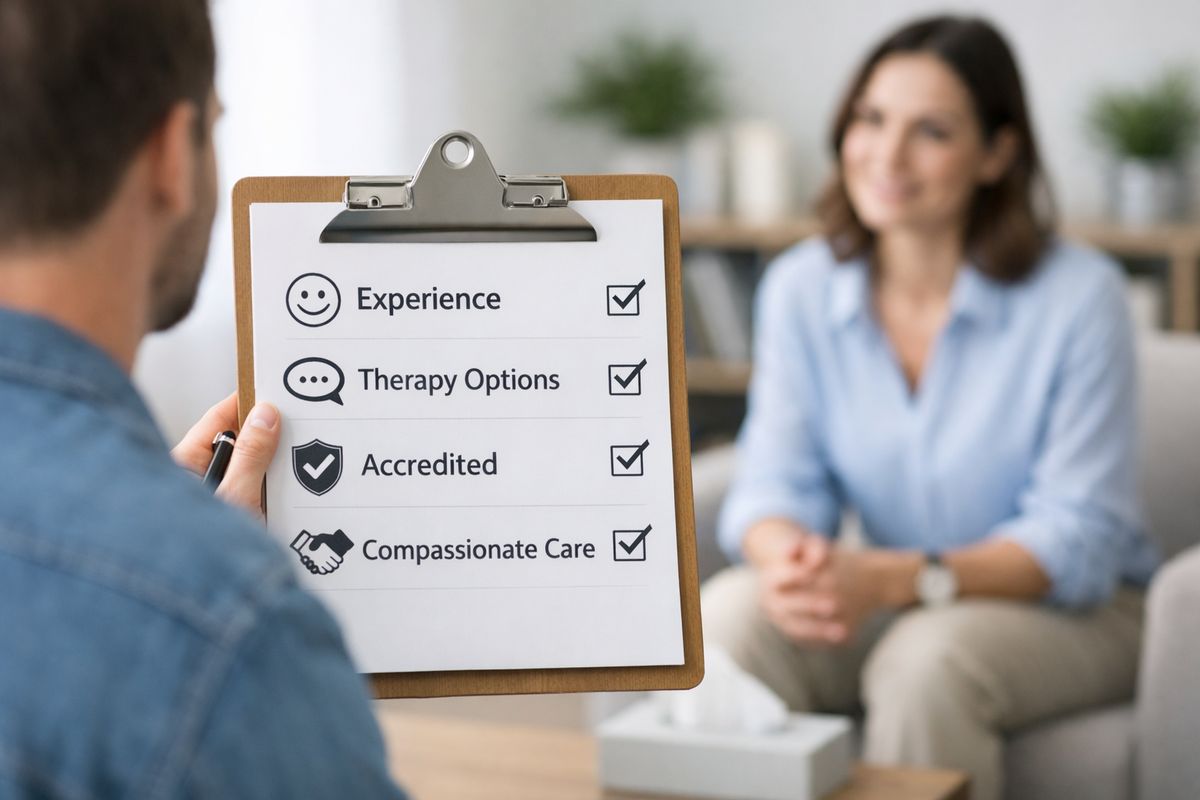

If you’re searching for an OCD outpatient therapy program, you might be ready to take control of unwanted thoughts and compulsive behaviors. These programs focus on evidence-based approaches like exposure and response prevention, cognitive therapy, and medication support, all delivered in a flexible, community-based setting. With an estimated 2.5 million adults—roughly 1.2% of the US population—affected by OCD [1], timely intervention can lead to significant improvements. Whether you’re facing mild or more severe symptoms, outpatient care provides the support necessary to manage obsessions and compulsions while maintaining your daily routine.
In this guide, you’ll find clear explanations of care levels—from standard therapy to intensive outpatient programs (IOP) and partial hospitalization (PHP)—along with the evidence-based methods driving successful outcomes. You’ll also learn about the benefits of outpatient treatment, strategies for addressing co-occurring conditions, and tips for choosing the right program. By the end, you’ll know how to take the next steps toward a more balanced, fulfilling life.
OCD and treatment options
What is OCD
Obsessive-compulsive disorder involves recurring, distressing thoughts (obsessions) and repetitive behaviors (compulsions) performed to relieve anxiety. Common obsessions include fears of contamination, harm, or symmetry, while compulsions may take the form of excessive hand-washing, checking rituals, or mental reviews. Left untreated, OCD can interfere with work, relationships, and overall quality of life.
Why choose outpatient therapy
Outpatient therapy lets you access structured treatment without giving up work, school, or family commitments. You’ll attend regular sessions—individual or group—at a clinic or community center, then practice coping skills in real-world settings. This blend of professional guidance and practical application helps you:
- Apply exposure exercises in your daily environment
- Maintain social and occupational routines
- Gradually increase independence as symptoms improve
levels of outpatient care
Different levels of outpatient support match intensity to need. Below is a comparison of standard outpatient therapy, intensive outpatient programs (IOP), and partial hospitalization programs (PHP):
| Level | Intensity | Sessions per week | Typical duration | Setting |
|---|---|---|---|---|
| Standard outpatient therapy | Low to moderate | 1–2 sessions | 3–12 months | Clinic or private office |
| Intensive outpatient program | Moderate to high | 9–15 hours (3–5 days) | 6–12 weeks | Clinic or day program |
| Partial hospitalization program | High | 20+ hours (5 days) | 4–8 weeks | Hospital-affiliated unit |
Standard outpatient therapy
Ideal for mild to moderate OCD, this level emphasizes weekly or biweekly cognitive-behavioral therapy (CBT) with exposure and response prevention (ERP). You’ll work one-on-one with a therapist, set personalized exposure hierarchies, and receive homework assignments to reinforce progress.
Intensive outpatient program (IOP)
An IOP delivers 3-hour sessions, Monday through Friday, combining ERP, skills groups, and individual check-ins. Clients in these programs achieve an average 64% reduction in symptoms over a shorter time period than traditional outpatient care [2].
Partial hospitalization program (PHP)
PHP offers daylong treatment in a structured hospital-affiliated setting. You’ll engage in multiple therapy modalities—individual, group, family—and receive medical monitoring. PHP bridges the gap between inpatient care and less intensive outpatient services.
evidence-based treatment approaches
Exposure and response prevention
ERP is the gold-standard therapy for OCD. You’ll gradually confront feared situations without performing compulsions, helping your brain form new, less fearful associations. Research shows ERP in both outpatient and intensive settings yields large effect sizes for symptom reduction [3].
Cognitive therapy and medications
Cognitive therapy targets distorted beliefs fueling obsessions, teaching you to recognize and challenge unhelpful thoughts. Selective serotonin reuptake inhibitors (SSRIs) like fluoxetine and sertraline, as well as clomipramine, are first-line medications for OCD [4]. Combining ERP with SSRIs often enhances outcomes for moderate to severe cases.
Adjunctive and holistic therapies
To complement core treatments, programs may offer:
- Acceptance and commitment therapy (ACT)
- Dialectical behavior therapy (DBT)
- Mindfulness-based stress reduction
- Habit reversal training (HRT) for tics and behaviors
These methods provide additional tools for coping and resilience.
benefits of outpatient programs
Flexibility and independence
You can maintain work, school, and family roles while attending treatment, applying skills immediately in your daily life. This real-world practice accelerates long-term recovery.
Peer support and group therapy
Group sessions connect you with others facing similar challenges, normalizing experiences and fostering mutual encouragement. Sharing progress and coping strategies builds community.
Continuity of care and coordination
Outpatient programs often coordinate with primary care physicians, psychiatrists, and support services. This seamless collaboration ensures that your treatment plan remains cohesive and responsive to changing needs.
treating co-occurring conditions
Integrated dual diagnosis support
If you’re managing both OCD and substance use or another mental health disorder, look for programs offering comprehensive dual diagnosis care. Integrated approaches address all conditions concurrently, improving overall outcomes and reducing relapse risk [5].
Addiction and mental health care
Programs with on-site medication management and counseling can support you through withdrawal, cravings, or co-occurring mood disorders. For dedicated outpatient addiction support, explore our iop for mental health and substance abuse.
Specialized programs for comorbidities
- PTSD: our ptsd outpatient treatment center integrates trauma-informed CBT
- Bipolar disorder: combine mood-stabilizing care with OCD therapy in our bipolar disorder treatment program
- Borderline personality disorder: access targeted DBT skills through our borderline personality disorder outpatient program
choosing the right program
Factors to consider
- Severity of symptoms and functional impact
- Frequency and duration of required sessions
- Therapist qualifications and program accreditation
- Availability of teletherapy or hybrid options
Insurance and affordability
Confirm that your insurance covers outpatient, IOP, or PHP services. Many programs bill major carriers and offer sliding-scale fees or financing plans.
Accreditation and expertise
Seek centers accredited by The Joint Commission or recognized by professional organizations. Accreditation indicates adherence to high standards in treatment quality and safety.
getting started with therapy
Initial assessment process
Your journey begins with a comprehensive evaluation. A licensed clinician reviews your medical and psychiatric history, OCD severity, and any co-occurring conditions. This assessment guides your personalized treatment plan.
Preparing for your first session
- List current symptoms, triggers, and coping strategies
- Gather medical records or medication lists
- Set realistic goals for exposure exercises
Expectations in early treatment
Early sessions focus on education, rapport building, and creating your ERP hierarchy. You’ll likely begin with low-anxiety exposures and gradually progress as confidence grows.
take control with next steps
Scheduling an evaluation
Reach out to your chosen provider to book an intake appointment. Many programs offer virtual or in-person assessments for your convenience.
Preparing to join
- Confirm logistical details: location, session times, insurance
- Share relevant history with your treatment team
- Set personal intentions, such as reducing time spent on rituals
By choosing an OCD outpatient therapy program tailored to your needs, you’re taking a proactive step toward managing symptoms and restoring balance. With the right level of care, evidence-based methods, and integrated support, you can reclaim your life from OCD and build lasting resilience. If you’re ready to begin, contact your preferred clinic today to schedule your assessment and start your journey to recovery.