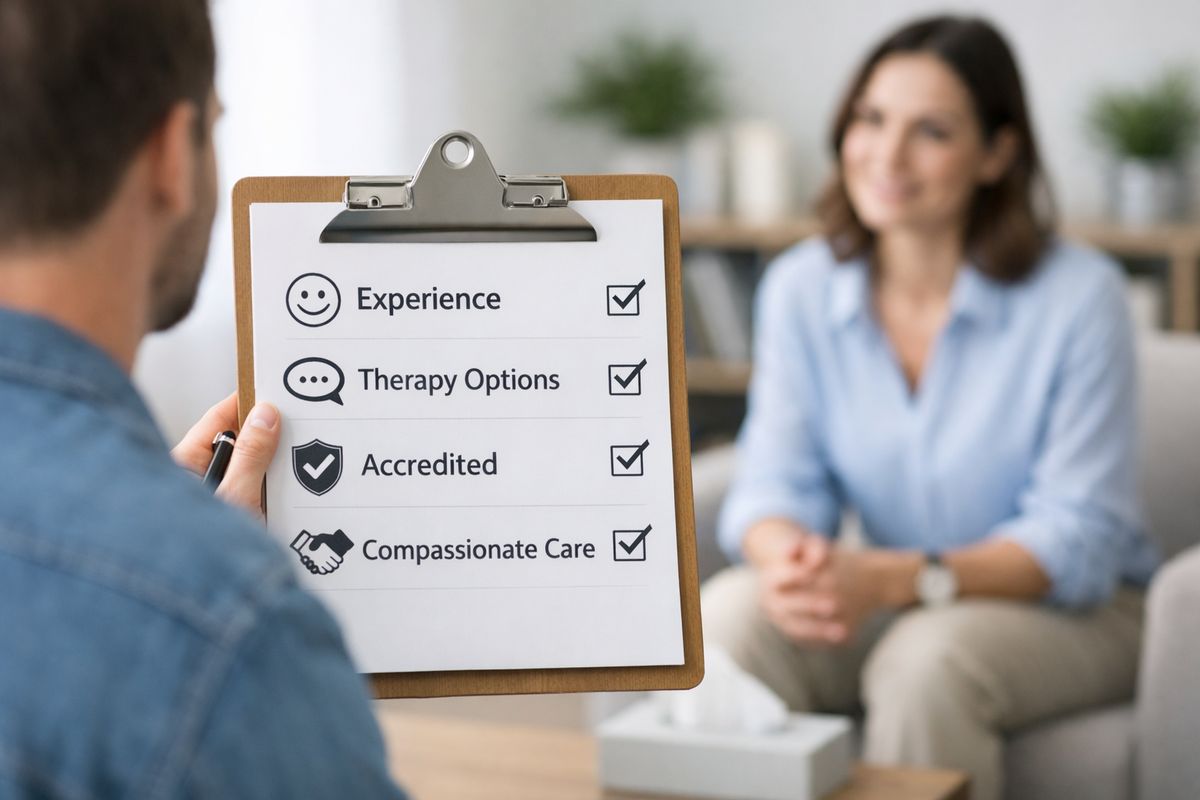

If you’re exploring a borderline personality disorder outpatient program, you’re taking a significant step toward managing your emotions and improving your day-to-day life. Outpatient care combines structured therapies with the flexibility to maintain your routines at work, school, or home, helping you build coping skills in real-world settings.
In this guide, you’ll learn how outpatient programs address the unique challenges of borderline personality disorder, what treatment components you can expect, and how to choose the right level of care. Whether you’re dealing with co-occurring addiction, depression, or anxiety, this overview will empower you to make informed decisions about your mental health journey.
Understanding outpatient programs
Unique challenges of BPD
Borderline personality disorder often involves intense mood swings, fear of abandonment, unstable relationships, impulsive behaviors, and self-harm. These symptoms can disrupt your daily functioning and strain personal connections. Roughly 1.4% of U.S. adults live with this condition, with many experiencing co-occurring depression, anxiety, or substance misuse [1].
By acknowledging these unique challenges, you can set realistic goals for recovery. Outpatient programs are designed to:
- Teach emotion-regulation and distress-tolerance skills
- Address interpersonal conflicts in a therapeutic setting
- Provide tools for impulse control and self-soothing
- Integrate support for co-occurring disorders
Purpose of outpatient care
Outpatient services allow you to attend therapy sessions at regular intervals—typically several times per week—while living at home. This format helps you:
- Apply coping strategies in daily life
- Maintain work or school commitments
- Receive ongoing monitoring of your progress
- Adjust treatment intensity as needed
Outpatient care often serves as the first step in a continuum that can include intensive outpatient (IOP), partial hospitalization (PHP), or residential programs. It provides a foundation of skills before considering more structured environments.
Explore therapy components
Psychotherapy approaches
Psychotherapy, or talk therapy, is the cornerstone of BPD treatment. It helps you understand emotional triggers, improve relationship dynamics, and develop healthier thought patterns [2]. Common modalities include:
| Therapy type | Description | Key components |
|---|---|---|
| Dialectical behavior therapy | Empirically supported for BPD, focuses on balancing acceptance and change [3] | Skills training, individual therapy, phone coaching, team consultation |
| Mentalization-based therapy | Improves ability to understand your own and others’ mental states [4] | Mentalizing skills, group sessions |
| Schema therapy | Identifies and modifies deeply held patterns that drive behavior [5] | Schema identification, cognitive restructuring |
Dialectical behavior therapy
DBT is the only empirically supported treatment for borderline personality disorder and has shown efficacy for co-occurring issues such as substance use and PTSD. It includes weekly individual and group sessions, plus phone coaching to reinforce skills in real situations.
Mentalization-based therapy
MBT helps you recognize and interpret mental states—yours and others’—to improve emotional regulation and interpersonal effectiveness. It typically involves long-term individual and group therapy.
Schema therapy
Schema therapy targets core beliefs formed in childhood that continue to influence behavior. By identifying and challenging maladaptive schemas, you learn healthier coping strategies.
Complementary therapies
Beyond core psychotherapy, outpatient programs often include:
- Creative therapies (art, music, drama) to express emotions nonverbally
- Group therapy to foster peer support and reduce isolation
- Crisis resolution teams offering short-term intensive support during acute episodes
Creative therapies
Engaging in art or music can help you externalize and process intense feelings. These sessions are led by trained therapists and may run weekly for up to two hours.
Crisis resolution teams
When symptoms escalate, talking to a crisis team can prevent hospital admission. Some programs provide after-hours contact lines and brief medication courses if needed.
Medication management
While no medications are FDA-approved specifically for BPD, pharmacotherapy can target co-existing symptoms like depression, anxiety, impulsivity, or aggression. Common options include:
- Selective serotonin reuptake inhibitors (SSRIs) to improve mood and reduce impulsiveness [3]
- Mood stabilizers for depressive episodes
- Atypical antipsychotics to manage anger and transient psychotic symptoms
Medication is used as an adjunct to psychotherapy and tailored to your specific symptom profile. Benzodiazepines are generally discouraged due to misuse risk.
Compare care options
Choosing the right intensity of care depends on the severity of your symptoms, your support system, and your daily obligations. Below is a comparison of levels of care:
| Care level | Weekly hours | Typical setting | Ideal for |
|---|---|---|---|
| Outpatient | 3–9 | Clinic | Stable symptoms, strong support network |
| Intensive outpatient program | 9–20 | Clinic | Moderate symptoms, need structured skill-building [6] |
| Partial hospitalization program | 20–30 | Day hospital | High-acuity cases requiring daily therapeutic engagement [7] |
| Residential treatment | 24/7 | Facility | Severe symptoms, safety concerns, limited community support |
By understanding these options, you can discuss with your provider whether stepping up from outpatient to IOP or PHP is appropriate, or if a residential stay may better ensure your safety.
Recognize program benefits
Flexibility and independence
Outpatient care lets you maintain employment, education, and family roles while participating in treatment. You can integrate new skills directly into your environment and gradually build resilience.
Integrated dual diagnosis care
If you have co-occurring addiction or another mental health disorder, look for programs offering combined treatment tracks. Integrated approaches ensure coordination between psychiatric care and substance abuse counseling, improving outcomes [8].
Cost and accessibility
Outpatient programs are generally more affordable than residential treatment and often covered by insurance. According to a cost-effectiveness analysis, intensive outpatient options can yield significant quality-of-life gains at a lower price point than step-down or residential DBT models [9].
Select the right program
Evaluate credentials
Confirm that the program is accredited and staffed by licensed mental health professionals—psychiatrists, psychologists, social workers, and certified DBT therapists. Accreditation by organizations such as The Joint Commission indicates quality standards.
Verify insurance coverage
Contact your insurer to verify benefits for outpatient therapy, group sessions, medication management, and any needed assessments. Ask about in-network providers to minimize out-of-pocket costs.
Consider support services
Look for programs offering:
- On-site psychiatric evaluation and medication management
- Family education and therapy options
- Peer-led support groups
- After-hours crisis consultation
These services enhance continuity of care and reduce the risk of relapse.
Begin your recovery journey
Undergo initial assessment
Your first step is a comprehensive evaluation by a psychiatrist or psychologist. This will cover:
- Symptom history and severity
- Co-occurring conditions (depression, anxiety, substance misuse)
- Previous treatment experiences
- Social and environmental factors
The assessment informs your individualized treatment plan.
Create personalized plan
Together with your care team, you’ll set specific goals—such as reducing self-harm urges, improving relationship stability, or managing mood swings. Your plan may include:
- Weekly individual therapy
- Skills training groups
- Medication protocols
- Family sessions
Build a support network
Recovery is a team effort. Cultivate connections with:
- Peer support groups or alumni networks
- Trusted friends or family members
- Crisis hotlines and community resources
Your outpatient program may offer referrals to local self-help meetings or specialized groups like borderline personality disorder counseling program.
Maintain long-term recovery
Track progress and milestones
Use journals, rating scales, or mobile apps to monitor:
- Mood fluctuations
- Frequency of impulsive behaviors
- Success in using coping skills
Regular progress reviews with your therapist allow you to celebrate gains and adjust strategies.
Utilize aftercare resources
After completing core treatment, consider:
- Ongoing maintenance therapy
- Booster DBT or skills refresher groups
- Outpatient therapy with psychiatric support
- Community-based support programs
These resources reinforce your skills and help prevent relapse.
Adjust your treatment as needed
Recovery is not linear. If you experience setbacks or increased symptoms, communicate with your provider about:
- Intensifying care (stepping up to IOP or PHP)
- Revising medication regimens
- Incorporating new therapeutic modalities
Timely adjustments keep you on track toward sustained wellness.
By understanding how an outpatient program for borderline personality disorder works, exploring its treatment components, and selecting the appropriate level of care, you can overcome common obstacles and move toward lasting recovery. If you’re ready to take the next step, reach out to inquire about our outpatient offerings or schedule a comprehensive assessment. Your journey to stability and healthier relationships begins today.