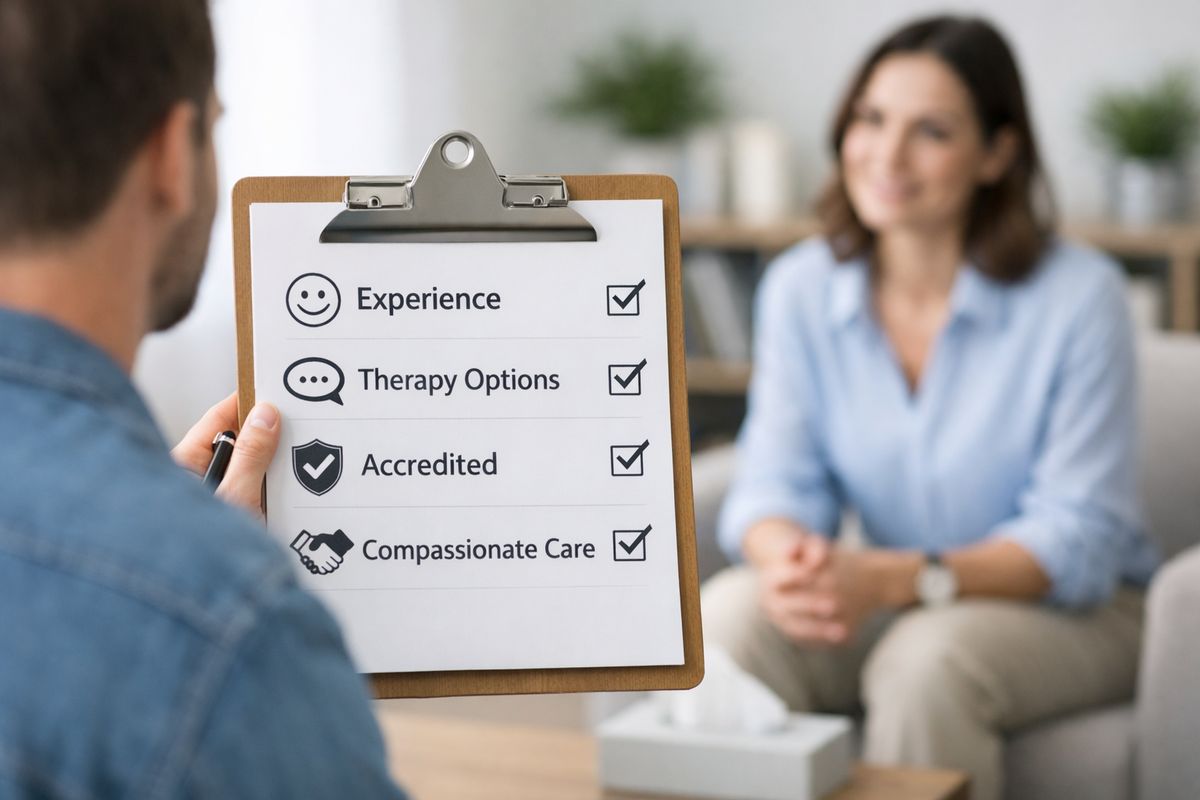

Understand faith-based recovery
When you choose a faith-based addiction recovery center, you step into an environment where spiritual values guide every aspect of care. A faith-based addiction recovery center combines your personal beliefs with evidence-based therapies, creating a bridge between your spiritual convictions and the clinical support you need to heal. From day one, you’ll find that prayer, scripture study, and worship services sit alongside medical supervision and behavioral therapies.
These centers are fully accredited and offer the same detox protocols, individual counseling, and group sessions found in secular facilities while weaving in religious practices such as daily devotionals or Torah discussion groups [1]. This integration ensures you never have to choose between faith and science—both fuel your path to sobriety. Since 1992, the Substance Abuse and Mental Health Services Administration’s Faith-Based and Community Initiatives program has supported centers like these, helping you locate trusted spiritual recovery options [1].
In practical terms, your daily schedule may include medication monitoring and cognitive behavioral therapy sessions in the morning, followed by midday worship or scripture reflection. Afternoons often bring trauma-informed group therapy or holistic activities, and evenings conclude with fellowship dinners or prayer circles. This balanced routine addresses your physical, emotional, and spiritual needs, reinforcing that recovery is more than symptom management—it’s whole-person transformation.
Whether you’re drawn to a Christian recovery model or prefer an interfaith approach, you’ll find accredited programs that respect your beliefs while delivering clinical excellence. As you explore faith-based options, consider how spiritual practices can bolster your resilience and fortify your commitment to lasting change.
Embrace spiritual accountability
Accountability in a faith-based setting extends beyond tracking your progress on a sobriety app. You’re supported by mentors, sponsors, or clergy who share your beliefs and hold you to both clinical goals and spiritual commitments. This dual accountability means you pray together, study scripture side by side, and review your triggers through both therapeutic and faith lenses.
Spiritual accountability also cultivates humility. By acknowledging your dependence on a higher power, you learn to surrender shame and embrace community support. This shift—from self-reliance to faith-based reliance—often breaks the cycle of secrecy that fuels relapse.
“Eighty-two percent of patients who experienced a ‘spiritual awakening’ during their addiction recovery were still sober one year later, compared to 55 percent of those without a spiritual component in their recovery”
[1]
These figures underscore the power of spiritual transformation. When you open yourself to a faith-driven process, you not only modify behaviors but also renew your sense of purpose. Mentors will guide you through forgiveness rituals, confession groups, or Torah study sessions, all designed to deepen your commitment to sobriety and personal growth.
By engaging in regular spiritual check-ins—whether one-on-one with a chaplain or in a small group—you reinforce healthy habits and maintain clarity about your long-term goals. This layered support often makes faith-based recovery more sustainable than purely clinical models.
Address trauma with support
Unresolved trauma can lie at the heart of many substance use disorders. A faith-based addiction recovery center recognizes this link and offers specialized trauma-informed therapies that respect your spiritual framework. You’ll work with licensed clinicians who integrate therapeutic modalities such as EMDR or cognitive processing therapy with prayer, scripture reflection, or spiritual counseling.
Trauma-informed holistic therapy goes beyond talk therapy by addressing how past wounds affect your body, mind, and spirit. Through gentle somatic exercises, guided meditation, and supportive group sharing, you learn to release the fear and shame held in your nervous system. This approach is tailored to your faith, so you might practice breathwork alongside a psalm or use guided imagery of divine light to soothe overwhelming memories [2].
Many programs also offer faith-integrated trauma therapy, where each clinical technique is paired with a relevant scriptural principle. For example, you might explore cognitive distortions alongside biblical teachings on identity and worth. This layering helps you reframe traumatic beliefs in a spiritually meaningful context and anchors your healing in both science and scripture. You can learn more about these specialized approaches through our trauma-integrated holistic therapy page, or explore faith-integrated trauma therapy to see how layers of faith and psychology work in tandem.
By the time you complete a trauma-informed track, you’ll have practical coping skills, a renewed sense of divine support, and a clearer narrative about how your faith helped you reclaim your life.
Integrate holistic healing
Faith-based recovery centers often extend beyond cognitive and spiritual exercises to embrace holistic wellness modalities. You’ll discover that healing involves nutrition, movement, creative expression, and energy work—all of which you can anchor in your belief system. At 70X7 Wellness Mission, holistic wellness in addiction care means aligning every intervention with your spiritual journey.
Many centers offer a range of complementary therapies tailored to your needs, such as:
- Yoga therapy addiction recovery exercises, where mindful movement deepens your connection to mind, body, and soul
- Meditation and breathwork in recovery sessions that incorporate guided visualization of divine presence
- Nutritional counseling rooted in dietary observances or fasting traditions for spiritual clarity
- Equine-assisted therapy or art therapy that fosters nonverbal expression of faith and healing
When these modalities come together, you experience a full-spectrum approach: your body regains balance, your mind cultivates awareness, and your spirit finds expression. Integrating holistic care ensures you don’t just survive detox—you flourish in a nurturing environment.
Each holistic element is framed within your faith community. Your yoga instructor may lead a prayer circle, or your meditation coach might open each session with a moment of scripture. This design reinforces the idea that wellness, like faith, is an ongoing practice rather than a quick fix.
Foster community and connection
Recovery thrives in community. In a faith-based setting, your peers share not only struggles with substance use but also the comfort of common beliefs. This shared foundation breaks down isolation, enabling you to speak frankly about doubts, setbacks, and victories without fear of judgment.
Group therapy often unfolds in a circle of trust, where you join in mutual prayer, Bible or Torah study, and open discussion. You’ll quickly learn that vulnerability begets vulnerability—when you share your story, others follow, creating a chain of empathy and support. A 2019 study led by sociologist Dr. Brian Grim found that seventy-three percent of substance abuse treatment programs in the U.S. incorporate spiritual components such as 12-step meetings, highlighting how community and faith go hand in hand in recovery [3].
When your center partners with local congregations, you gain access to weekend support groups, sober social events, and service projects—all designed to fortify your sense of belonging. Congregations that back recovery initiatives contribute an estimated $316 billion in savings to the U.S. economy, demonstrating the vast social value of community-based faith programs [3].
These networks aren’t just sources of social activity—they’re accountability structures. When you know your faith family awaits your progress, you’re more likely to stay engaged and uphold your commitments.
Strengthen relapse prevention
Preventing relapse requires more than avoiding triggers—it demands ongoing spiritual nourishment and practical coping strategies. Faith-based relapse prevention programs teach you to spot warning signs early, couple them with prayer or meditation, and reach out for help before cravings escalate.
You’ll learn mindfulness techniques that fully engage both mind and spirit. For instance, you might practice centering prayer when tension arises or repeat a sacred mantra during stressful moments. These skills complement clinical relapse prevention approaches, creating a layered defense against setbacks [4].
A 2021 Hong Kong study demonstrated that developing religiosity during treatment raised the odds of abstinence by about 39.1 percent six months after discharge, emphasizing how spiritual growth directly impacts long-term success [5]. Furthermore, religious support networks and deeply held meanings—like viewing recovery as a spiritual calling—corresponded with even greater odds of sustained sobriety.
While medication-assisted treatment may still play a vital role in addressing opioid dependence, combining it with faith-based relapse prevention offers a comprehensive safety net. By pairing clinically validated medications with spiritual practices, you create a robust, multi-pronged strategy for lasting recovery.
Evaluate program options
Selecting the right center means aligning your recovery goals with a program’s offerings. Start by determining the level of care you need—whether that’s residential detox, inpatient treatment, or an outpatient faith-based recovery track that lets you maintain family and work responsibilities. Each option can be tailored to your faith preferences, from overtly Christian models to interdenominational or nonsectarian approaches.
If you seek specialized Christian support, explore a christian addiction treatment program that centers on biblical counseling and 12-step spirituality. For a more integrated wellness focus, you might prefer a holistic detox and recovery center that pairs medical supervision with yoga, acupuncture, and devotional practices. Review each facility’s accreditation, staff credentials, and success metrics.
Since 1992, the Substance Abuse and Mental Health Services Administration has backed faith-based recovery services nationwide, providing resources and standards you can trust [1]. Always verify whether programs are licensed by your state and accredited by national bodies such as the Joint Commission or CARF. Finally, check insurance coverage and sliding-scale options—many faith-based centers partner with nonprofit insurers to keep care affordable.
By doing your homework—touring facilities, interviewing counselors, and reviewing testimonials—you position yourself for a seamless transition into a community that resonates with your spiritual and clinical needs.
Experience lasting transformation
Ultimately, a faith-based approach grounds your recovery in hope and purpose. When you see addiction as part of a larger spiritual journey, each milestone—from your first sober day to one year of continued abstinence—carries sacred significance. This perspective reshapes challenges into opportunities for growth and deepens your relationship with something greater than yourself.
Redemption and forgiveness lie at the heart of many religious traditions. In recovery, embracing these themes helps you let go of guilt and extend grace to yourself and others. Regular spiritual counseling sessions offer a space to explore questions of meaning, identity, and calling beyond addiction. You can learn more about how faith guides this process through our recovery through spiritual counseling resources.
Research confirms the profound impact of faith on substance use risk. Nearly ninety percent of studies reviewed found that religious involvement reduced alcohol abuse, while eighty-four percent reported lower drug misuse among believers [3]. These data underscore how your spiritual convictions become a powerful deterrent against relapse.
At 70X7 Wellness Mission, you’ll find an integrated model that unites spiritual care, trauma-informed therapy, and holistic wellness modalities. Whether you engage in yoga therapy, group worship, or trauma-integrated EMDR, every element is designed to support your renewed mind, body, and spirit. Embrace this comprehensive path and experience a transformation that lasts far beyond your stay.