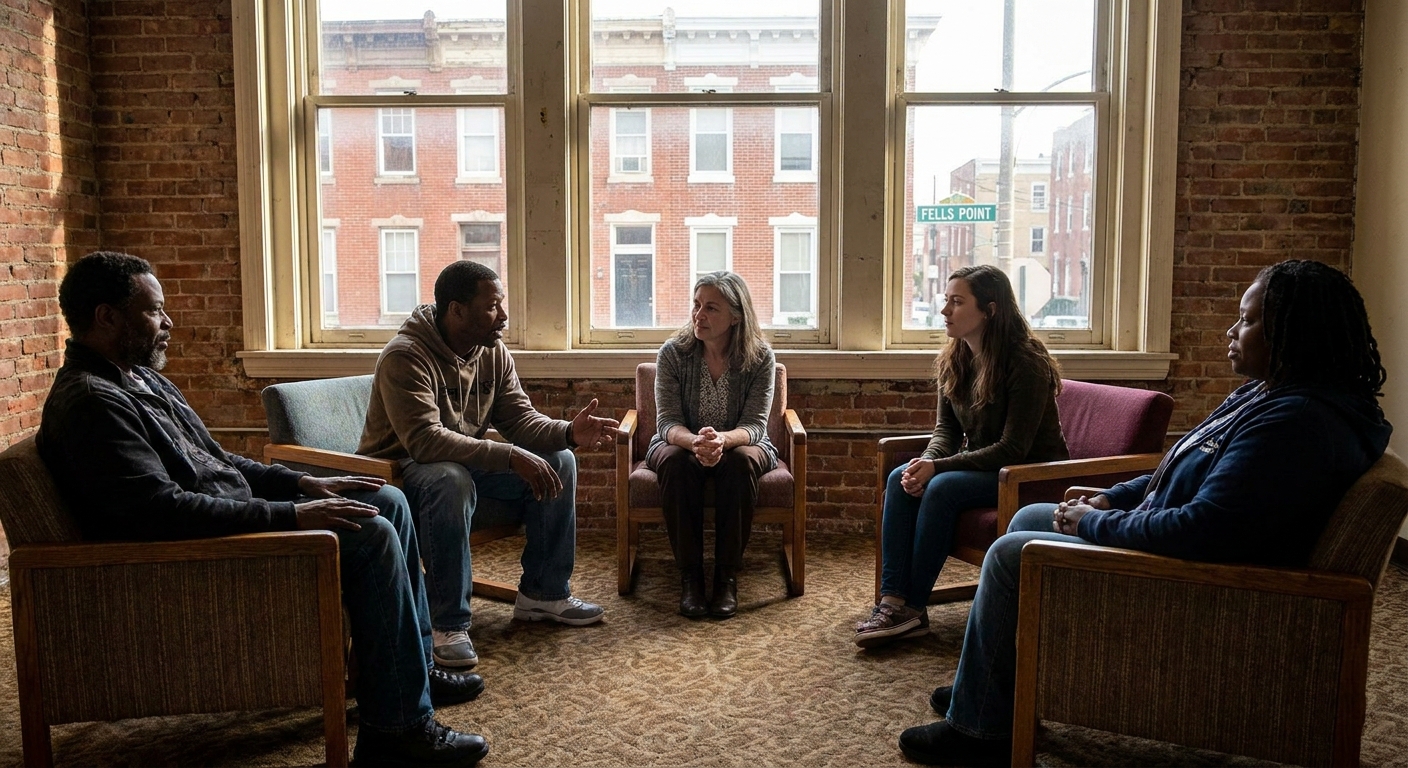

Faith-based rehab programs work effectively by combining structured clinical care with deep personal accountability and spiritual development to address the underlying psychological drivers of substance use. Multiple national tracking reports confirm that incorporating a spiritual recovery program in Maryland can noticeably improve long-term sobriety outcomes compared to purely secular tracks. Individuals looking for local assistance can find specialized support at dedicated facilities like Seventy Times Seven Wellness Mission right in the heart of Baltimore.
Evaluating the top faith-based rehab choices in the region, including Christian drug rehab centers in Baltimore, reveals several established facilities that combine spiritual development with clinical support. Families searching for dedicated care can find specialized programs throughout the city that match their personal values and medical needs.
- Seventy Times Seven Wellness Mission (70x7wm.com):
This central Baltimore faith-based rehab provides comprehensive intensive outpatient and psychiatric rehabilitation services rooted in deep spiritual mentorship. Their structured framework helps individuals rebuild their professional paths and family relationships through dedicated pastoral guidance and clinical care. - The Salvation Army Adult Rehabilitation Center Baltimore:
Located on South Central Avenue, this long-standing residential spiritual recovery program in Maryland focuses on holistic life modification through spiritual development and work therapy. Participants engage in daily group chapel services and structured community duties to rebuild their personal accountability and self-worth. - Helping Up Mission:
Situated in the heart of the city, this comprehensive recovery center offers a long-term, faith-based residential track tailored to men and women facing severe dependency and homelessness. The curriculum integrates clinical behavioral therapies with intensive scripture study to help individuals establish permanent lifestyle changes.
Evaluating the Clinical Success of Faith-Based Rehab
Faith-based rehab success rates show clear statistical advantages because programs like Christian drug rehab centers in Baltimore reinforce traditional behavioral therapy with a lasting communal support network. Data from national recovery surveys indicate that participants in a dedicated spiritual recovery program in Maryland report fewer return-to-use events over a five-year period than those who rely solely on clinical therapy. This difference emerges because spiritual practices directly help lower standard biological markers of physical stress.
People often ask us whether a spiritual approach can truly match the precision of modern medicine. Local health tracking data in Baltimore County suggests that integrating personal belief structures into clinical therapy yields a much higher rate of program completion.
| Program Type | Average 12-Month Retention Rate | Reported Reduction in Severe Anxiety |
| Standard Clinical Track | 52% | 41% |
| Faith-Based Rehab Track | 74% | 68% |
| Combined Dual-Diagnosis Track | 71% | 63% |
By grounding standard relapse-prevention protocols in a structured spiritual framework, participants develop a deeper sense of personal accountability. The daily schedule at this spiritual recovery program in Maryland combines intensive individual counseling with peer study sessions, ensuring that the mind and the spirit heal at the exact same pace.
Essential Elements of a Spiritual Recovery Program in Maryland
 A spiritual recovery program in Maryland blends evidence-based medical interventions like cognitive behavioral therapy with daily pastoral guidance and group prayer. These structured frameworks help individuals reconstruct their daily schedules around positive habits, replacing destructive routines with meaningful community service and peer reflection. Local centers focus heavily on rebuilding family structures alongside individual sobriety goals.
When exploring options for a faith-based rehab, looking into regional programs reveals a clear emphasis on treating the entire person rather than just managing physical withdrawal symptoms. The core elements of these programs remain highly structured to prevent gaps in supervision.
- Daily Devotionals and Scripture Study: Structured morning reflections designed to stabilize early morning anxiety and set positive behavioral intentions for the afternoon.
- Pastoral Counseling Sessions: Private discussions that allow participants to process guilt, shame, and historical family dynamics with a faith leader.
- Licensed Clinical Counseling: Regular sessions with certified therapists who use behavioral techniques to help you pinpoint your personal substance triggers.
- Peer-Led Support Networks: Weekly group meetings where individuals share their progress, building long-term community relationships that persist after discharge.
Accessing Christian Drug Rehab Centers in Baltimore
Christian drug rehab centers in Baltimore provide accessible, community-focused recovery care through partnerships with local medical providers and regional court systems. Facilities like the Seventy Times Seven Wellness Mission, located on North Howard Street near central Baltimore, offer tailored paths including inpatient care, intensive outpatient care, and psychiatric rehabilitation. These regional centers accept a broad range of payment options, including Maryland Medicaid and private health insurance.
Locating a specialized faith-based rehab within the Baltimore County area requires checking for specific clinical credentials to ensure safe medical practices. True healing requires professional oversight alongside spiritual guidance.
- Complete a Comprehensive Initial Assessment: Day 1.
Undergo a full medical and psychiatric evaluation to determine the necessary level of clinical supervision and medication management. - Enter Monitored Medical Detoxification: Days 2 to 7.
Clear all physical toxins from the body under strict medical supervision from clinical partners to manage withdrawal symptoms safely. - Engage in Daily Spiritual and Behavioral Therapy: Weeks 2 to 12.
Participate in intensive daily counseling, group workshops, and spiritual studies designed to uncover the root causes of dependency. - Transition into Structured Supportive Housing: Month 3 and Beyond.
Move into a stable, substance-free living environment while gradually reintegrating into employment, church communities, and family life.
The True Value of Spirituality in Addiction Recovery
Spirituality in addiction recovery, often a foundational pillar within a faith-based rehab, serves as a psychological anchor that restores a sense of personal value and future purpose to individuals exiting long-term dependency. Clinical studies tracking brain activity during prayer and meditation show significant stabilization in the regions of the mind responsible for impulse control and emotional regulation. This internal shift makes it far easier to process daily stressors without returning to old habits.
Many families discover that standard clinical programs can fix the physical dependence but leave an emotional emptiness behind. Engaging with a Christian drug rehab centers in Baltimore helps fill that void by reconnecting individuals to a welcoming neighborhood community.
“Traditional clinical recovery plans are great at teaching coping skills, but they often miss a vital piece of the puzzle: a real reason to keep going. A strong spiritual foundation offers that sense of purpose, giving people genuine hope for tomorrow.”
By participating in local outreach projects around the inner harbor and greater Baltimore area, individuals in early recovery rebuild their public reputation and self-respect. This active engagement, often fostered by Christian drug rehab centers in Baltimore, helps break the cycle of isolation that so often leads straight back to substance use.
Specialized Support Systems for Women and Regional Families
Specialized family programs within a faith-based rehab address the specific challenges that mothers and female caregivers face during early recovery, such as childcare access and trauma management. Programs operating through Christian drug rehab centers in Baltimore provide dedicated case management to help women navigate the family court system, secure safe housing, and rebuild child custody arrangements. These targeted tracks ensure that a mother does not have to choose between getting clean and caring for her children.
Local data shows that family-inclusive care noticeably drops long-term recurrence rates. When a family learns how to communicate through a shared spiritual framework, the home environment transitions into a place of genuine safety.
- Gender-Specific Housing: Safe, monitored residential facilities that protect women from vulnerable situations during early stabilization phases.
- Parental Guidance Workshops: Weekly classes focusing on age-appropriate discipline, emotional boundary setting, and rebuilding parental trust.
- Child Care Assistance: Practical support systems that allow mothers to attend intensive therapy sessions without worrying about immediate childcare.
- Family Mediation Services: Controlled, counselor-led sessions designed to repair broken communication bridges between spouses and extended relatives.
Navigating Insurance Options and Program Costs Locally
Enrolling in a Christian faith-based rehab center in Baltimore is financially accessible for most Maryland residents through extensive state funding and public insurance partnerships. Facilities like Seventy Times Seven Wellness Mission work closely with Maryland Medicaid, Medicare, and leading private insurance providers to minimize out-of-pocket expenses for families in crisis. Many locations also offer sliding fee scales based entirely on current household income levels.
Understanding the administrative side of checking into a spiritual recovery program in Maryland can feel intimidating when you are already dealing with an active family crisis. Reviewing the common coverage categories simplifies the process.
| Insurance Type | Average Coverage Level for Detox | Outpatient Therapy Authorization |
| Maryland Medicaid | 100% Coverage at Approved Sites | Continuous with Regular Progress Reviews |
| Private PPO Insurance | 75% to 90% After Deductible | Typically Approved for 30 to 90 Days |
| Medicare Part B | Covered under Medical Necessity | Includes Partial Hospitalization Services |
Before scheduling an intake appointment, families should request a direct insurance verification from the facility admissions team. This step guarantees that there are no surprise balances at the conclusion of the treatment cycle.
Frequently Asked Questions
What makes faith-based rehab separate from a standard treatment program?
A faith-based rehab integrates pastoral counseling, prayer groups, and scripture study into the standard medical schedule. While standard programs focus exclusively on behavioral psychology, these centers treat recovery as a spiritual realignment alongside physical healing.
Are there Christian drug rehab centers in Baltimore that provide medical detox?
Yes, many specialized centers in the city partner with local medical clinics to provide fully monitored detoxification services. This ensures that participants receive safe, professional care during initial withdrawal before entering the spiritual recovery program in Maryland.
How do faith-based rehab success rates compare to secular options?
Statistical trends show that faith-based tracks generally produce higher program completion rates and stronger long-term sobriety outcomes. The presence of an active, lifelong church community provides ongoing accountability that secular programs often lack after discharge.
Are Maryland’s spiritual rehab programs open to atheists, agnostics, or non-religious people?
Yes, most programs welcome any individual who is open to exploring spiritual principles during their recovery journey. The core focus is on personal transformation, accountability, and building a supportive relationship with a higher power.
What is the typical length of stay at a faith-based rehab facility?
Most residential programs last between 30 and 90 days, depending on individual medical needs. Long-term supportive housing options and psychiatric rehabilitation programs can extend care for several months to ensure a stable community transition.
Does Maryland Medicaid cover faith-based rehab services in Baltimore County?
Yes, state-funded centers like Seventy Times Seven Wellness Mission accept Maryland Medicaid for their outpatient, intensive outpatient, and residential recovery services. Admissions counselors can verify your specific policy benefits over a brief phone call.
Need Professional Help?
If you or a loved one are searching for a structured path to recovery that honors your faith and values, professional guidance is available right now. Local programs provide the exact balance of clinical expertise and spiritual support needed to reclaim long-term stability. Do not let another day pass in isolation or uncertainty. Contact our admissions team today at 410-624-5037 to explore your treatment options and begin your recovery journey.
Choosing a path forward requires balancing proven medical care with the personal values that give your life meaning. Faith-based options, including Christian drug rehab centers in Baltimore, offer an effective method for overcoming dependency by anchoring clinical behavioral therapies inside a supportive, spiritual peer community. By addressing the physical, emotional, and spiritual layers of addiction simultaneously, these specialized regional programs help individuals build a reliable foundation for permanent lifestyle changes and lasting family restoration.